 高招云直播
高招云直播
用“非标准答案”
奔赴你的“旷野人生”
——在2026届毕业生毕业典礼暨学位授予仪式上的致辞

校党委副书记、校长 郭福
(2026年6月23日)
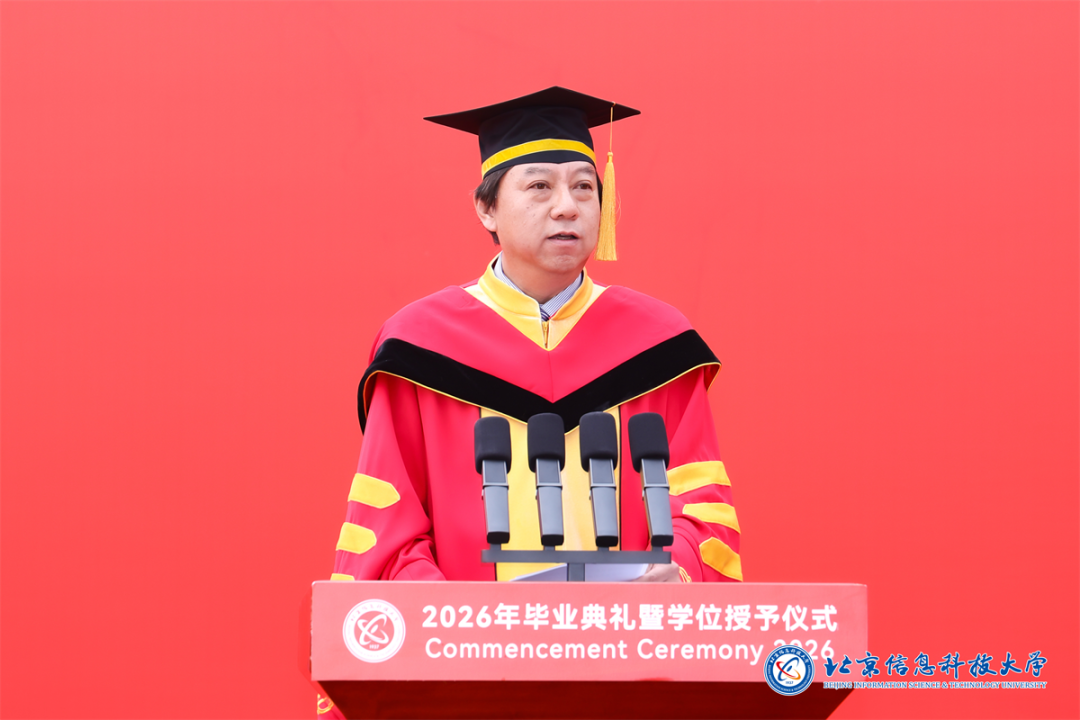
亲爱的2026届毕业生,尊敬的各位老师、家长朋友们:
大家好!
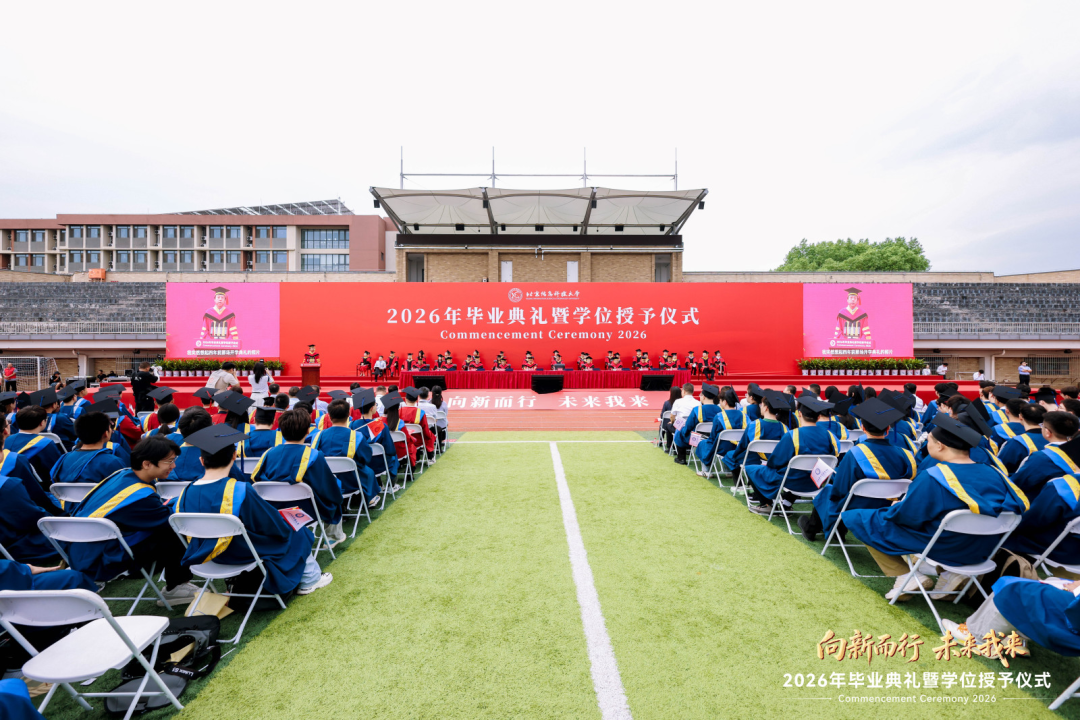
今天是隆重的毕业典礼,是一年一度的盛典,对我们每一个人来说都是个大日子,尤其是你们——2026届毕业生们!看着你们今天穿着学位服站在这里,我突然想起四年前那场开学典礼的照片。那时你们脸上的青涩还在,眼神里却已经写满了对未来的笃定。四年,从小营到沙河,从清晨的早读到深夜的图书馆,从一次次代码的报错到一份份打磨出来的论文——你们终于走到了今天。首先,请允许我谨代表解江凌书记、代表全校师生员工,向光荣的2026届毕业生们,致以最热烈的祝贺!你们做到了!
按照惯例,这样的场合总要谈成功、谈梦想、谈远方。但今天,我想和你们谈一件不那么轻松,却很重要的事:比失败更早到来的,往往不是挫折,而是我们脑海中挥之不去的对“标准答案”的执念。
失败其实并没有想象中可怕,甚至还有点儿可爱——它能让你认清边界、长出铠甲。但“标准答案”不一样——它会让你在还没看清世界之前,就以为自己握着通关秘籍;在还没来得及试错之前,就熟练地按下了人生的“自动驾驶”键。它最大的危害,不是让你丢分,而是让你误以为:人生和做选择题一样,只要足够理性、足够卷,就一定能算出“最优解”。
这些年,我观察过很多和你们一样的年轻人。大一刷绩点,大二攒竞赛,大三盯实习,大四磨简历,研究生阶段早早地就把小论文准备好。每一步都精准、漂亮、无可挑剔。你们是聪明的、上进的、能打硬仗的一代。
但我真正担心的,不是你们不够优秀,而是——你们太早学会了优秀。太早学会在规则中胜出,太早学会用确定性对抗不安,太早学会把自己训练成一个高效率、低摩擦、强适配的竞争者。这当然会带来成功,但它也可能让一个人越来越会证明自己,却越来越少认识自己;越来越会回应世界的要求,却越来越不清楚自己内心真正的方向;越来越像一个“完成得很好的人”,却越来越不像一个“正在生长的人”。
人生中真正重要的问题,恰恰常常没有标准答案。什么值得投入一生?什么比赢更重要?什么时候该坚持,什么时候该放弃?什么是成功,什么又只是看上去成功?——这些问题不仅没有统一答案,甚至连题目本身,都需要你自己去发现。
而你们即将走进的这个时代,正在让这个问题变得更加迫切。今天,答案正在以前所未有的速度变得廉价。信息检索、模型生成、知识获取、方案输出——答案几乎触手可及。但这也意味着一个新的风险:当答案越来越便宜,提问就会越来越昂贵。未来真正重要的人,不只是会使用工具的人,而是能判断工具把我们带向何处的人;不只是能完成任务的人,而是能重新定义任务的人;不只是能回答既有问题的人,而是能提出全新问题的人。
这也是为什么,这些年学校一直在推动课程和评价方式的改革。不是因为标准答案一无是处,而是因为我们必须承认:如果教育只奖励快速、准确、规范地复述答案,那么它最终培养出来的,很可能是最适合昨天世界的人,而不是能够创造明天世界的人。教育不仅要让人有用,更要让人自由;不仅要让人胜任工作,更要让人不被工作定义;不仅要让人进入世界,更要让人在进入世界之后,仍然保有怀疑世界、修正世界、重新想象世界的能力。
也许只有真正离开校园之后,你们才会更深地明白,大学曾给过你们一种多么珍贵的自由:可以试错,可以迟疑,可以改主意,可以暂时不把每一次热爱都折算成收益。走入社会之后,自由和浪漫并不会消失,但它们会变得更有重量——自由需要本领、自律和承担来支撑,浪漫则是在看清现实之后,依然愿意相信、热爱和创造。
所以,同学们,今天作为临别赠言,我想送你们五句话。它们不一定顺耳,但我希望你们记得。
第一,允许自己迟疑,允许自己改主意。
不要太早把自己交给标准答案。别人告诉你的“正确道路”,可以参考,但不必轻易当成命运。那些看上去“不划算”的探索、走过的弯路、改过的主意,常常不是浪费,而是你慢慢长成自己的过程。
第二,为热爱、责任和信念,留出位置。
人生当然有竞争,但人生不只剩竞争。还有热爱、友谊、尊严,还有那些不能简单用输赢概括的东西。请为它们留出位置,因为一份朴素而持久的热爱,一种愿意承担的责任,常常比一时的得失更能定义你是谁。
第三,不囿于单一标签,不困于一方天地。
简历可以帮你获得机会,但不要把自己活成一份完美简历,更不要由它替你定义人生。专业、岗位、城市、平台、收入,当然重要,但它们只能说明你身处何处,不能决定你是谁。标签可以让人被识别,却不能替人完成自我;平台可以提供起点,却不该成为你想象世界的边界。
第四,比速度更重要的是方向,比结果更重要的是代价,比有用更重要的是值得。
这个时代会不断奖励快、稳、准、强,也会不断催促你向前奔跑。但请你时不时停下来问一句:我跑得这么快,是奔着哪里去?我得到这个结果,要付出什么代价?这件事有用之外,是否真的值得?
第五,保留提问的能力,也保留判断的自由。
未来你们会遇到很多响亮的答案:关于成功,关于体面,关于什么才算值得。它们有时来自时代,有时来自行业,有时来自身边人的期待。但请你记得,越是人人都在熟练作答的时候,越要给自己留一点提问的空间。不是为了否定一切,而是为了确认:这个答案,是否真的属于我。
同学们,
轨道很稳,但旷野很大。
毕业意味着,你们将离开校园,真正走进一个比课堂更复杂、比试卷更模糊、比标准答案更暧昧的世界。在那里,有些问题有答案,更多的问题没有;有些问题需要效率,更多的问题需要判断;有些事情可以计算,更多重要的事情,不能只靠计算。那是一片旷野。没有路标,没有标准路线,甚至没有人告诉你哪条路最对。但也正因为没有标准路线——你走出的每一步,才都算数。
明年,是学校建校90周年。近九十年来,我们从战火中一路走来,从北京机械学院、北京信息工程学院,到今天的北京信息科技大学。我们也没有走过什么“标准路线”——我们在传承中创新,在坚守中突破,每一次更名、每一次迁建、每一次转型,都是一次面向未知的远征。所以你们也一样。母校不希望你们成为“标准的信息科大人”,而希望你们成为“独一无二的信息科大人”。
愿你们此去,不是去做一个永远正确的人,而是去做一个始终清醒的人;不是去做一个永远适配世界的人,而是去做一个必要时敢于对世界提出不同意见的人;不是去追赶所有现成答案,而是在真正重要的问题面前,活出自己的回答。
四年前,你们走进信息科大,是为了找到答案;四年后,我希望你们走出信息科大,是为了找到属于自己的问题。
最后,祝全体毕业生毕业快乐!
愿你们带着能力出发,更带着自由前行;愿你们拥有答题的能力,更拥有不急于回答一切的底气。
谢谢大家!
(英文对照版)
Embracing the “Unscripted Answers”
of Your Open Road
— Commencement Address to the Class of 2026

by Fu Guo, President of BISTU
(June 23, 2026)
Members of the Class of 2026, respected faculty, families, and friends:
Good morning.
Today is commencement — a moment that, once a year, becomes a milestone for all of us, and most of all for you, the Class of 2026! Looking at all of you in your caps and gowns, I find myself thinking back to a photograph from your convocation four years ago. The look of uncertainty you wore then is gone now, replaced by something steadier — a quiet conviction about what comes next. Four years. From Xiaoying to Shahe campus. From early mornings in the lecture halls to long nights in the library. From the code that wouldn’t compile to the thesis that finally did. You have arrived. On behalf of Chairman of the University Council, Prof. Xie Jiangling, and on behalf of the entire university community, let me be the first to say it plainly:congratulations. You made it.
Now, at occasions like this, there is a familiar script. We talk about success. We talk about dreams. We talk about the wider world waiting for you. But this morning, I’d like to speak with you about something that may not be easy, but is truly important:
What tends to arrive earlier than failure in a young person’s life is not setback. It is the quiet hold that “the right answer” has on our imagination.
Failure, frankly, is not the worst thing — and there is even something endearing about it. Failure shows you your edges. It builds something in you that nothing else can. But the search for “the right answer” is different. It tempts you to believe you already hold the map before you’ve even seen the territory. It lets you slip into autopilot before you’ve truly begun the journey. And here is the real danger: it can lead you to believe that life, like a multiple-choice exam, has a single optimal solution — if only you are rational enough, disciplined enough, relentless enough to find it.
Over the past years, I have watched many of you. Freshman year, chasing the GPA. Sophomore year, stacking the competitions. Junior year, locking in the internship. Senior year, polishing the résumé. Our graduate students — you had your papers ready long before you ever needed them. Every step, precise. Every step, well-executed. You are, without question, one of the smartest, most driven, most capable generations this university has ever graduated.
But what I worry about is not that you aren’t excellent. What I worry about is this —that you may have learned to be excellent too early.Too early, you have learned how to win within the rules. Too early, you have learned how to use certainty as armor against doubt. Too early, you have trained yourselves into something efficient, frictionless, perfectly adapted to compete. That kind of preparation will take you far. But it can also leave a personvery good at proving themselves, and not yet very good at knowing themselves— very good at meeting the world’s expectations, and less and less sure of their own inner direction — someone who looks finished, when they are really just beginning.
The truth is, the questions that matter most in life don’t come with answer keys. What is worth giving your life to? What matters more than winning? When do you hold on, and when do you let go? What does success really look like — and what only looks like success? These are not questions anyone else can answer for you. Often, you’ll find that even the question itself is something you have to discover on your own.
And the world you are about to enter only makes this more urgent. We are living through a moment in whichanswers are becoming remarkably cheap.Search, generation, retrieval, recommendation — answers are everywhere, and they are nearly free. But this comes with a quiet new cost:
When answers become cheap, questions become precious.The people who will matter most in the years ahead are not simply those who can use the tools. They are the ones who can judge where the tools are taking us. Not simply those who can complete the task — but those who can rethink what the task should be. Not simply those who can answer the question on the page — but those who can name a question no one has thought to ask.
This is why, in recent years, our university has been rethinking how we teach and how we evaluate. Not because the “right answer” has no place — but because we have to be honest with ourselves:if education only rewards the quick, the accurate, and the well-formatted, we will graduate people beautifully prepared for yesterday’s world, and not the one they actually have to build.Education should not only make a person useful — it should make a person free.It should not only prepare you to do a job — it should keep you from being wholly defined by one. It should not only send you into the world — it should leave you, once you are in it, still capable of questioning that world, of correcting it, of imagining it differently.
Perhaps only after you have truly left campus will you come to understand more deeply what a precious freedom the university has given you: the freedom to try and fail, to hesitate, to change your mind, and, for a time, not to measure every passion by its return. As you step into the wider world, freedom and romance will not disappear. But they will carry greater weight. Freedom will need to be sustained by competence, discipline, and responsibility. And romance will no longer mean simply dreaming above reality; it will mean seeing the world clearly, and still choosing to believe, to love, and to create.
In that spirit, let me offer you five thoughts by way of parting counsel. Not advice, exactly, but five things I hope you will carry with you.
First — allow yourself to hesitate, and allow yourself to change your mind.
Don’t surrender yourself too early to someone else’s right answer. The “right path” that others describe to you is worth listening to. It is not worth mistaking for destiny. The detours you take, the plans you revise, the things you try and step away from — these are not wasted years. They are, very often, the years in which you actually become yourself.
Second — leave room for passion, responsibility, and conviction.
Yes, there will always be competition. But life is not only competition. There is also passion, friendship, dignity, and many things that cannot be measured simply in terms of winning and losing. Make room for them. For a quiet and enduring love, and a responsibility you are willing to shoulder, often reveal more about who you are than any passing gain or loss.
Third — do not be confined by a single label, or trapped within one small corner of the world.
A résumé can help open doors. But don’t live your life as one, and certainly don’t let it tell you who you are once you walk through them. Your major, your position, your town, your institution, your income: all of these matter, of course. But they can only describe where you are; they cannot determine who you are. Labels may help others recognize you, but they cannot complete the work of becoming yourself. A platform may give you a place to start with, but it should never become the boundary of your imagination.
Fourth — direction matters more than speed; cost matters more than outcome; and what is worthwhile matters more than what is merely useful.
This age will continue to reward those who are fast, steady, precise, and strong. It will also keep urging you to run ever faster. Just promise me you will pause, every so often, and ask:If I am moving so quickly, where am I really going? What price am I paying for this result? Beyond being useful, is this truly worth pursuing?
Fifth — preserve your ability to ask questions, and preserve your freedom to judge for yourself.
In the years ahead, you will encounter many confident answers — answers about success, about respectability, about what is supposed to be worth pursuing. Sometimes they will come from the times we live in, sometimes from the industries you enter, and sometimes from the expectations of people around you. But remember: the more fluently everyone else seems to be giving answers, the more important it is to leave yourself room to ask questions. Not in order to reject everything, but in order to be sure of one thing: whether this answer truly belongs to you.
Class of 2026,
The track is safe. But the open country is wider.
To graduate is to step out of a place where the questions had answers, and into a world that is more complicated than any classroom, more uncertain than any exam, and far more ambiguous than any rubric. Out there, some questions will have answers. Most will not. Some will reward efficiency. More will demand judgment. Some things can be calculated. The things that matter most — usually cannot. That is the open road. There are no signposts. There is no standard route. No one is going to tell you which way is correct. But that is exactly whyevery step you take out there will count.
Next year, our university will mark its 90th anniversary. For nearly nine decades — through war, through rebuilding, from the Beijing Institute of Mechanical Engineering, to the Beijing Institute of Information Engineering, to the Beijing Information Science and Technology University you know today — we have never walked a “standard route” either. Every renaming, every relocation, every reinvention was, in its own way, a journey into the unknown. So you are in good company. This university does not hope to send you out as “a typical BISTU graduate.” We hope to send you out asa BISTU graduate unlike any other.
So go. Not to become someone who is always right — but someone who stays clear-eyed. Not to become someone who always fits the world — but someone with the courage, when it matters, to tell the world it has it wrong. Not to chase every answer the world hands you — but tolive your own answerto the questions that actually matter.
Four years ago, you came to this university looking for answers. Today, I hope you leave it ready to findthe questions that are truly yours.
To the Class of 2026 — congratulations once again.
May you set out with skill — and travel with freedom. May you have the ability to answer. And may you have, more than anything,the quiet confidence not to answer everything too quickly.
Thank you.
来源|学校新闻网
版式/责编 |蒋瓅
审核 | 陈红英 郭辉
近日精彩
三地同框,一镜到底!信息科大的校园真的好美!
连续7次A+!全国TOP1%!信息科大机器人竞赛指数获评最高评级
北京信息科技大学(张家口)天枢书院开放日火爆开启!





 沪公网安备
31011302004820号
沪公网安备
31011302004820号 优志愿 | 手机客户端

